




How to Layer Room Sprays, Diffusers, and Candles for a Cohesive Scent
Most customers walk into the store, buy one luxury candle, and leave thinking they've solved their home fragrance problem. Two weeks later, the same customers come back asking why the kitchen still smells like dinner, why the bathroom smells like nothing, and why the bedroom feels stale when they walk in. The candle is doing its job. It is also the only thing they own that's doing any job.
The fix is not buying a bigger candle. A bigger candle still cannot be lit in the bathroom, cannot run while you're at work, and cannot help with the cooking smell that lingers after the candle has been blown out. The fix is layering: a candle that does evenings and atmosphere, a diffuser that does 24/7 ambient baseline, and a room spray that does transitions. Three formats, three jobs, one cohesive scent ecosystem instead of one product trying to do everything.
This is the layering system I teach at the counter when someone asks me how to make their candle scent extend across the day and the house. There are three principles and four patterns. I'll walk through both.
Why three formats instead of one
Each format does a job the other two cannot do. Buying all three because they're in the same scent family is the move. Buying three of the same format because you like the scent is not.
Candles are the anchor. The strongest throw of the three, the most atmospheric, the format with ritual built in. Lighting a candle is the moment a room shifts from functional to social. A luxury candle is also the format with the biggest single-purchase impact, which is why most people start here. But it can only run when you're home and watching it, which is roughly four hours a day. The other twenty hours need something else.
Reed diffusers are the 24/7 baseline. No flame, runs continuously for two to three months on a single bottle, fills small-to-medium spaces consistently. The bathroom, entryway, walk-in closet, and small home office almost always want a diffuser before they want a candle, because those rooms either cannot safely hold an open flame or aren't occupied long enough to justify lighting one. The diffuser is also the format that does the work while you're at work.
Room sprays are the high-leverage moment tool. Faster onset than either of the above, dissipates within thirty to ninety minutes depending on the formula, built for transitions: post-cooking, pre-guest, post-shower, after the dog has been on the couch. A spray cannot be your daily baseline. It is the format that fixes a specific moment, then steps back.
The three layering principles I use at the counter
Every layering decision passes through these three filters in order. State the answer to each before buying anything.
Principle 1: Pick the lead format first. One format has to be the strongest expression of your scent. Everything else supports it. For most living rooms and bedrooms, that's the candle because the candle has the strongest throw. For an entryway or bathroom, that's the diffuser because the candle cannot safely run unattended. Pick the lead first, then build the support stack around it. The biggest layering mistake I see is stacking three equal formats with three equal throws. The result is a muddled fragrance because nothing wins.
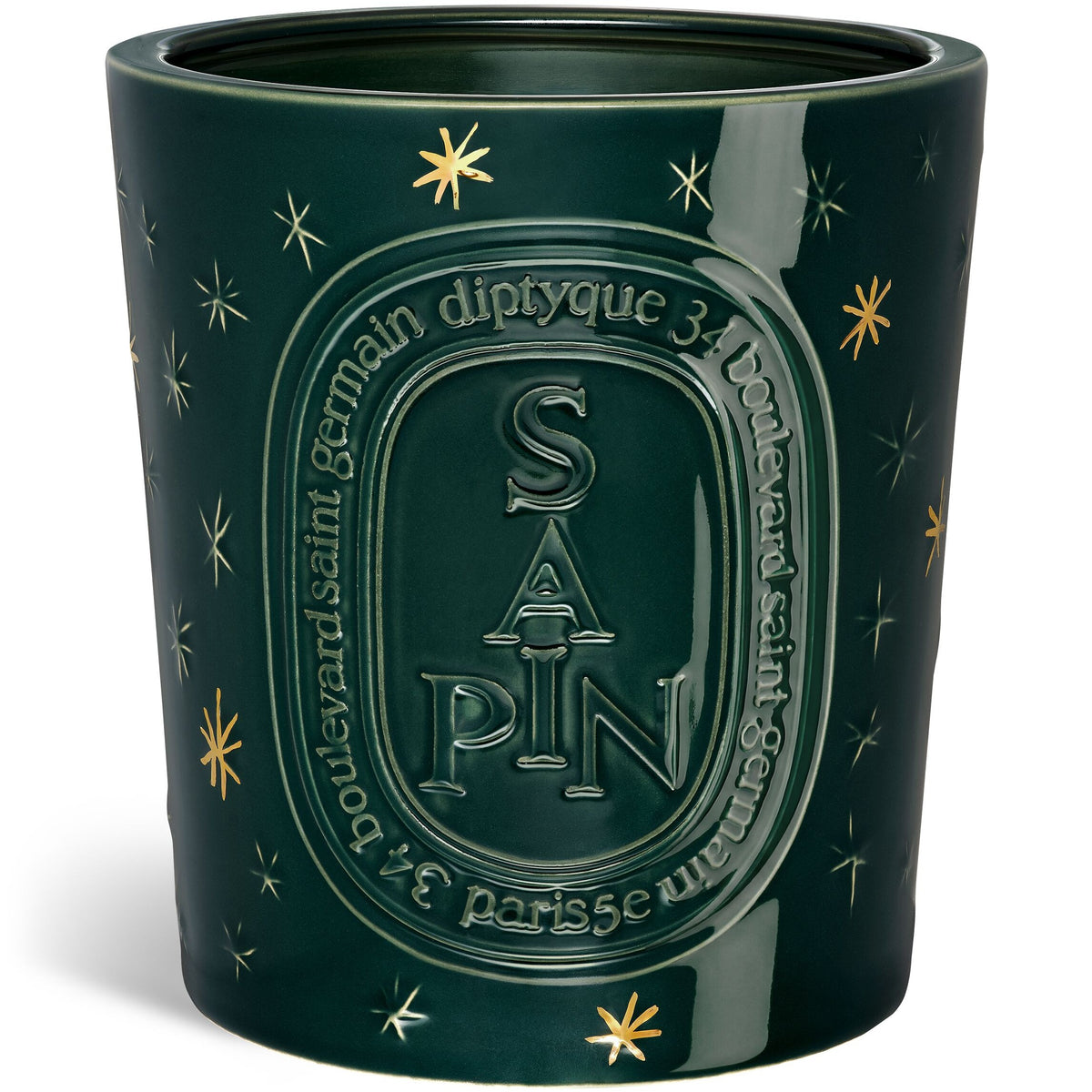
Principle 2: Match your accord, vary your intensity. Two valid layering strategies exist. Matched accord means same scent or same family across all three formats: Goji Tarocco candle + Goji Tarocco diffuser + Goji Tarocco room spray. Easier to execute, cohesion is built in, almost never fails. Complementary accord means different scents that share a base note family: a Diptyque Baies candle (fruit-floral) paired with a P.F. Candle Co. Amber & Moss diffuser (warm wood-amber). More sophisticated, requires testing, but reads more interesting once you get it right. Beginners should match for the first six months. Then experiment.
Principle 3: Place each format where it works. Geography matters as much as scent matching. Diffuser goes at the threshold or in a small enclosed space: entryway, bathroom, walk-in closet, home office. Candle goes on the social surface: coffee table, console table against a wall (uses the wall as a reflector), or near the HVAC air return for strongest distribution. Room spray is held in reserve for the moment that calls for it: spray the entry before guests arrive, spray the kitchen post-cooking, spray the bathroom pre-shower. Wrong-room placement is the second biggest layering mistake. A diffuser on the coffee table is overpowered by the candle next to it and wastes the bottle.
Four layering patterns I recommend at the counter
Four patterns cover almost every layering question I get at the counter. Pick the one that matches your buying personality, then execute.
Pattern 1: The Matched Triplet (easiest, most coherent)

One brand, one scent, all three formats. Cohesion is built in because the scent house designed all three to play together. The trade-off is less surprise: every room smells exactly the same, which is the point.
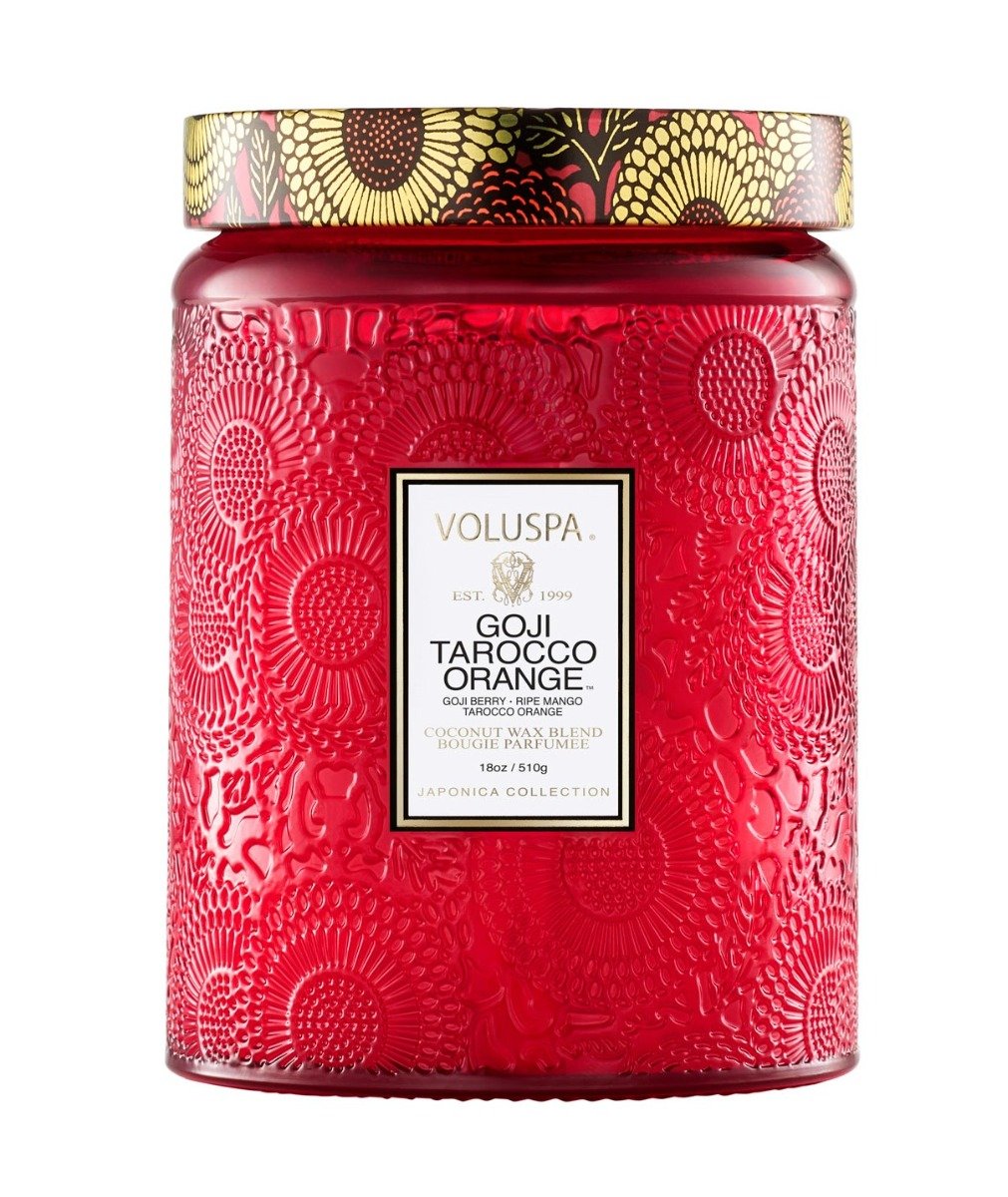
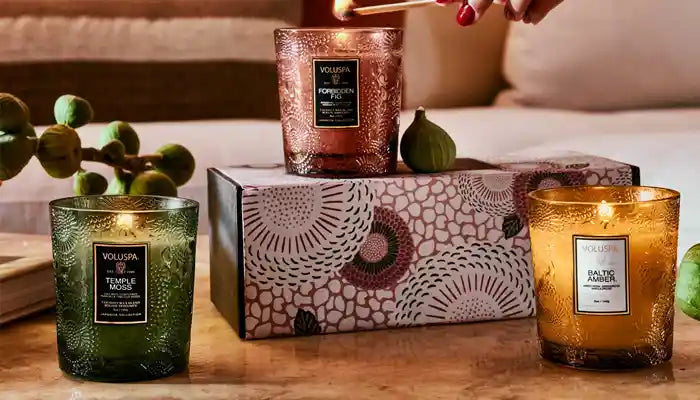
The pattern's flagship is the Voluspa Goji Tarocco Orange triplet: candle at $34, room spray at $28, diffuser at $34. Total $96 for a full-house signature scent in a bright blood orange and goji accord that reads well in daytime spaces such as kitchens, home offices, and entryways. The diffuser sits at the entry doing 24/7 baseline. The candle goes on the living room console. The spray covers post-cooking and pre-guest transitions.
Why this works: Voluspa's Classic line uses a consistent coconut-wax base across all three formats, which means the scent reads the same way whether it's reed-diffused, sprayed, or burned. Cross-format consistency at this price point is rare. Most matched triplets at the luxury level cost two to three times this.
Buy if: you want low-friction full-format coverage and you respond to bright citrus and berry accords.
Pattern 2: Cross-Brand Single Accord (real-world layering)

Same scent family, different brands. This is what most buyers actually do because you usually already own a candle from one brand and don't want to buy the matching spray at full luxury price. Different houses interpret the same accord in different ways, but with care, the layering still reads as one cohesive scent.
The pattern's flagship is the firewood stack: Diptyque Feu de Bois Candle at $78 (the heritage firewood note, the gold standard) + LAFCO Feu de Bois Ski House Home Fragrance Mist at $44 (same scent name, different luxury house, surprisingly close on the firewood note) + P.F. Candle Co. Amber & Moss Diffuser at $33 as the 24/7 baseline (warm amber and moss that lives in the same accord family without competing).
Why this works: the Diptyque candle does the prime-time atmosphere, the LAFCO mist refreshes the firewood note when the candle has been out for an hour, and the P.F. Candle Co. diffuser keeps a warmer wood-amber baseline going when nothing else is active. Three brands, one accord family.
Buy if: you already own one luxury candle and want to extend it without paying the full luxury-brand price across all three formats. This is the most economical luxury-tier layering pattern in the store.
Pattern 3: Complementary Accord Layering (advanced, more interesting)

Different scents that share a base note family or harmonize across families. The hardest pattern to execute. Done well, it reads more sophisticated than either matched approach because the scent develops across the day instead of repeating.
A reliable starter: Diptyque Baies Candle at $90 (black currant + rose, the universal living-room signature) + P.F. Candle Co. Amber & Moss Room Spray at $22 (warm amber + green moss, complementary to Baies without competing) + a cleaner wood-accord diffuser at the entry. The Baies anchors the social space. The Amber & Moss spray transitions the kitchen and entry into something warmer when guests arrive. The wood diffuser keeps a low ambient hum that does not fight the Baies.
For buyers who prefer a smoky-woods lead, our founder Anthony Carro spent two decades comparing smoky-woods candles before creating Delirium Suede & Smoke ($58, 75-hour burn, leather + moss + tobacco). It's the value pick in the candle position: same per-hour cost-effective composition as the luxury houses at roughly half the per-format cost. Pair it with the P.F. Candle Co. Amber & Moss spray and diffuser for a continuously layered smoky-warm signature across the day.
Why this works: the lead candle establishes the dominant accord (fruit-floral or smoky-wood). The complementary spray and diffuser add a different but harmonizing note family rather than repeating. The result reads as a developed scent profile rather than a single repeated note.
Buy if: you've done matched or cross-brand layering for six months and want to graduate. Skip if this is your first attempt at layering, since the success rate is lower when you have to test pairings before buying full bottles.
Pattern 4: The Brand Wardrobe (rotating one multi-format brand across seasons)

A specific layering approach that flies under the radar at our store: buyers who want one brand they can shop year-round, varying the scent by season but keeping the vessel design, wax formulation, and packaging consistent across the home. Most luxury candle brands force you to mix vessels from multiple houses to get seasonal range. A few brands don't.
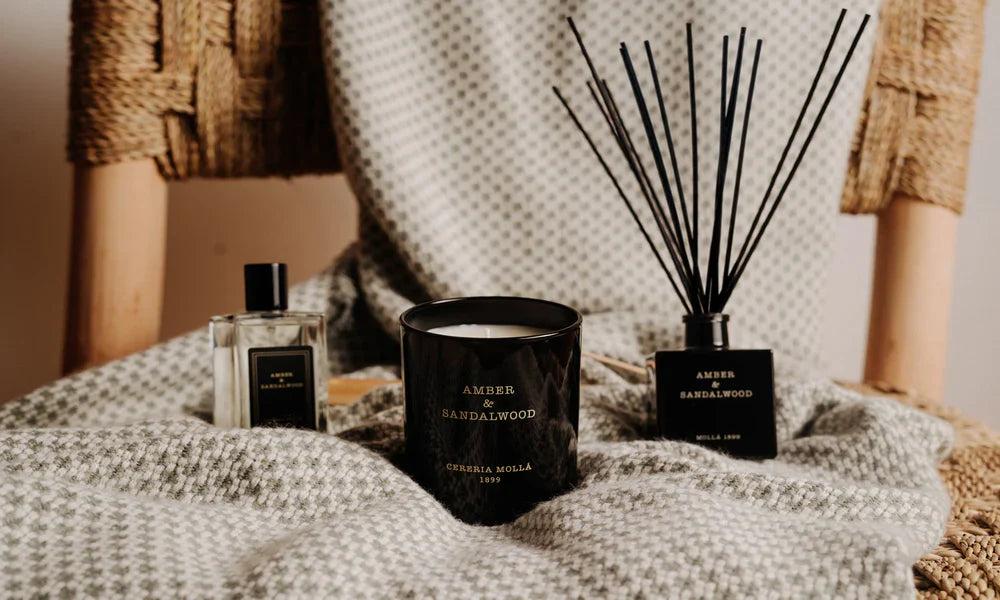
Cereria Molla 1899 is the deepest example of this approach in our store. A Spanish home fragrance house founded in 1899, with matched triplets (candle + room spray + 100ml diffuser, all priced uniformly at $49.95) across at least four scent families that read distinctly across the seasons. The brand wardrobe move: don't buy one triplet, buy four, and rotate by season.
The four-season Cereria Molla rotation:
- Spring / summer: Tuberose & Jasmine (candle $49.95 + room & body spray $49.95 + 100ml diffuser $49.95). White-floral, daytime-friendly, pairs with open windows and brunch. Total $149.85 for the full triplet.
- Fall transitional: Bulgarian Rose & Oud (full triplet $149.85, spray + diffuser). Sophisticated rose layered over smoky oud, the scent that signals the season is changing. Reads richer than the spring/summer pick without going fully into winter territory.
- Winter cozy: Velvet Wood (full triplet $149.85, spray + diffuser). Smoky woods accord, the cozy fireside reading scent. Closest in family to Diptyque Feu de Bois at roughly 60% of the per-format cost.
- Holiday / dessert moments: Raspberry & Black Vanilla (full triplet $149.85, spray + diffuser). Sweet fruit and dark vanilla, narrower season but lands hard during December dinner parties and holiday hosting.
Why this works: brand consistency in vessel design, wax formulation, and packaging across all 12 SKUs means your home looks coordinated even as the dominant scent rotates seasonally. Cereria Molla's vessels are deliberately object-grade, designed to sit out on a shelf year-round rather than hide in a drawer. The packaging is part of the look. Uniform $49.95 pricing across candle, spray, and diffuser also means you do not have to do per-format math to plan a rotation; everything is $150 per matched triplet.
Buy if: you want one brand that travels through all four seasons with matched triplets across the rotation. The per-scent investment is $149.85, comparable to a single Diptyque triplet, but you get four seasonal moods instead of one.
Skip if: you want maximum scent diversity across houses. The four scents above all share Cereria Molla's house style: Spanish heritage interpretation, slightly sweeter and warmer than the French luxury brands. If you prefer the colder French aesthetic (Diptyque, Trudon), this is not your wardrobe brand.
Anthony's cheat sheet
If you have read this far and want the short version:
- First-time layerer: buy the Voluspa Goji Tarocco triplet ($96 total). Matched-accord cohesion, no thinking required.
- You already own a luxury candle and want to extend it: match the scent name in a cheaper-tier mist + grab any complementary-family diffuser at our store. The LAFCO Feu de Bois mist + Diptyque Feu de Bois candle pairing is the gold standard for this move.
- You want one matched candle + diffuser: pick a brand that makes both. Voluspa is the safest at this price tier. Skip the spray for now and add it later when you decide you need it.
- You want maximum cohesion with minimum spend: diffuser at the entry + candle in the main living space + skip the spray. Two formats covers 80% of the daily scent experience. The spray is the last 20%.
- You want the smoky-woods signature on a budget: Delirium Suede & Smoke candle ($58, 75-hour burn) + P.F. Candle Co. Amber & Moss spray ($22) + P.F. Candle Co. Amber & Moss diffuser ($33). Total $113 for full-format luxury-tier coverage.
- You want one brand you can rotate seasonally: Cereria Molla 1899. Four seasonal matched triplets, $149.85 each, brand-consistent vessel design across all rotations. Spanish home fragrance heritage since 1899. The deepest single-brand wardrobe in our store.
Come into our West Hollywood store at 7980 Santa Monica Boulevard if you want to smell any of these pairings together before committing.