



Article: Types of Candle Scents: How to Choose the Right One for You and Your Room
Types of Candle Scents: How to Choose the Right One for You and Your Room
The smell of a candle in the jar is not the smell of the candle burning. Cold throw, what you catch when you lift the lid, and hot throw, what fills the room after the wax pool forms, can read like two different candles, and that gap is the single biggest reason people bring home a candle scent they never finish. After more than two decades selling 60+ luxury brands side by side at our West Hollywood store, we have learned that choosing well comes down to three decisions made in order: the scent family you already love, the room the candle will live in, and how you test it before you buy.
Anthony Carro, founder of Candle Delirium, puts the safe starting point plainly in his guide to choosing a signature home fragrance: Diptyque Baies "works for everyone. That is not a marketing line, it is what I see at the register." Everything below is how to get from that safe pick to the candle scent that is actually yours.
What Are the Six Candle Scent Families, and Which Candle Should You Start With in Each?
Perfumers sort fragrance into families, and candles follow the same map. Once you know which family you reach for in perfume, soap or even food, you have narrowed a wall of hundreds of candles down to a shelf. We group the floor into six families, and for each one we name the single candle we would hand a first-time buyer. According to our 2026 Luxury Candle Report, leather, tobacco, smoke and suede scents claimed two of our top six bestselling candles between June 2025 and May 2026, including the number one spot, after the strongest of them ranked only thirteenth the year before. Tastes move, which is exactly why the family matters more than the trend.
| Scent family | What it smells like | Best room | Our first pick |
|---|---|---|---|
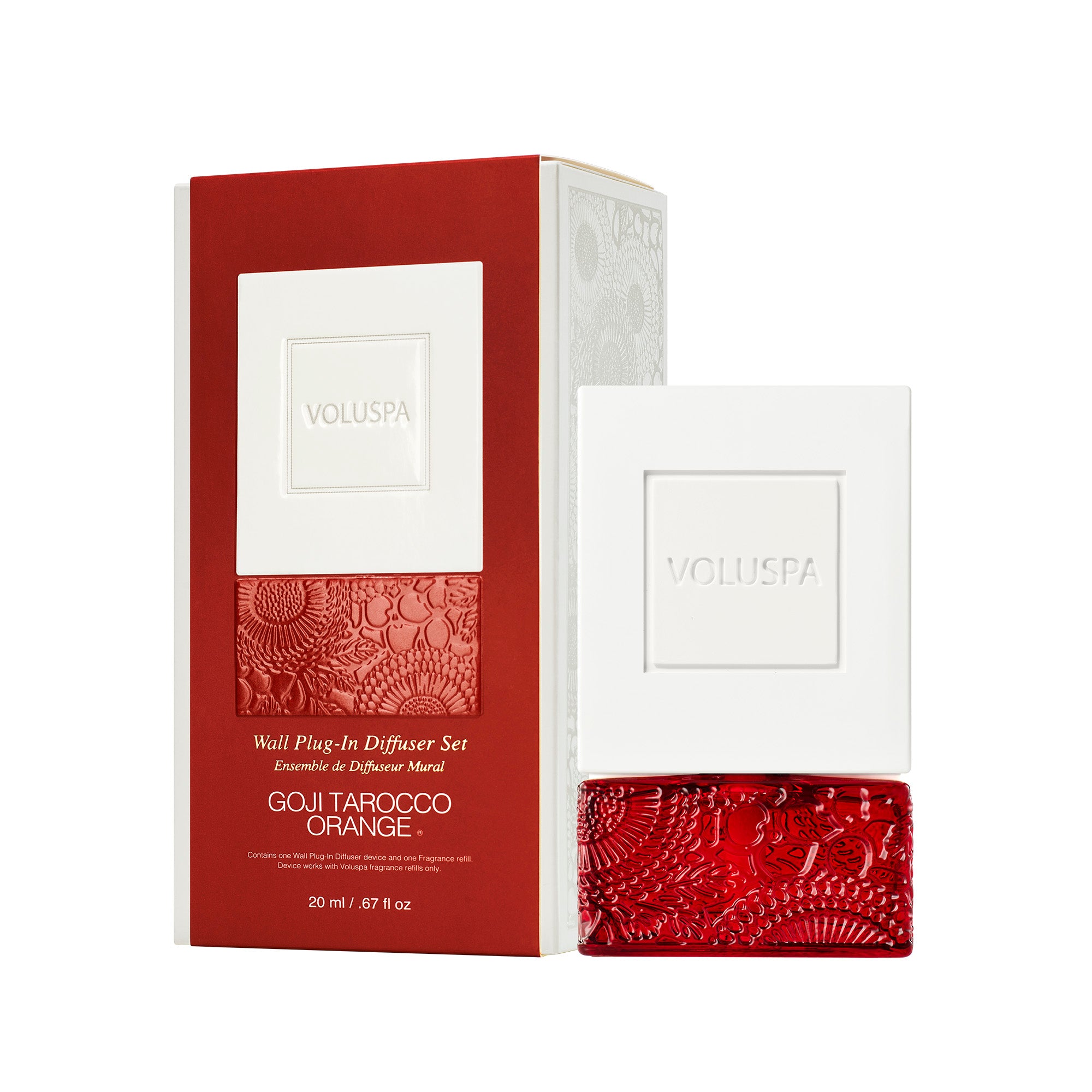
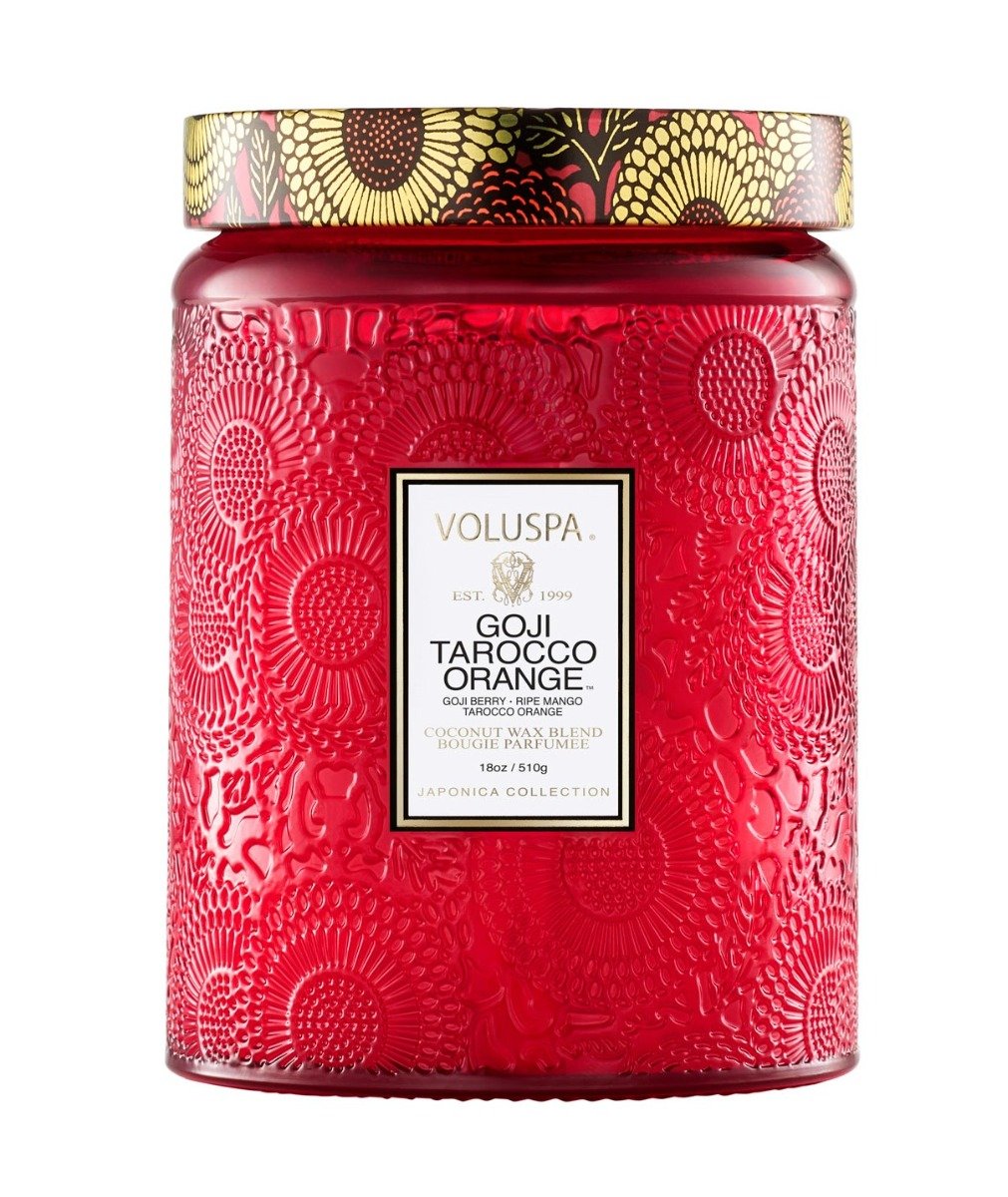
| Fresh and citrus | Peel, zest and juice: orange, grapefruit, bergamot | Kitchen, home office, morning rooms | Voluspa Goji Tarocco Orange (blood orange, goji) |
| Fruity | Ripe berries and orchard fruit, often with a green leaf | Living room, entry, anywhere guests arrive | Diptyque Baies (blackcurrant, Bulgarian rose) |
| Floral | Petals, from soft rose to heady white flowers | Bedroom, bath, a table set for dinner | Cereria Molla Tuberose & Jasmine (tuberose, jasmine, orange blossom) |
| Green | Leaves, stems, sap and herbs rather than flowers | Bathroom, reading corner, year-round shelves | Diptyque Figuier (fig leaf, bark, green fig) |
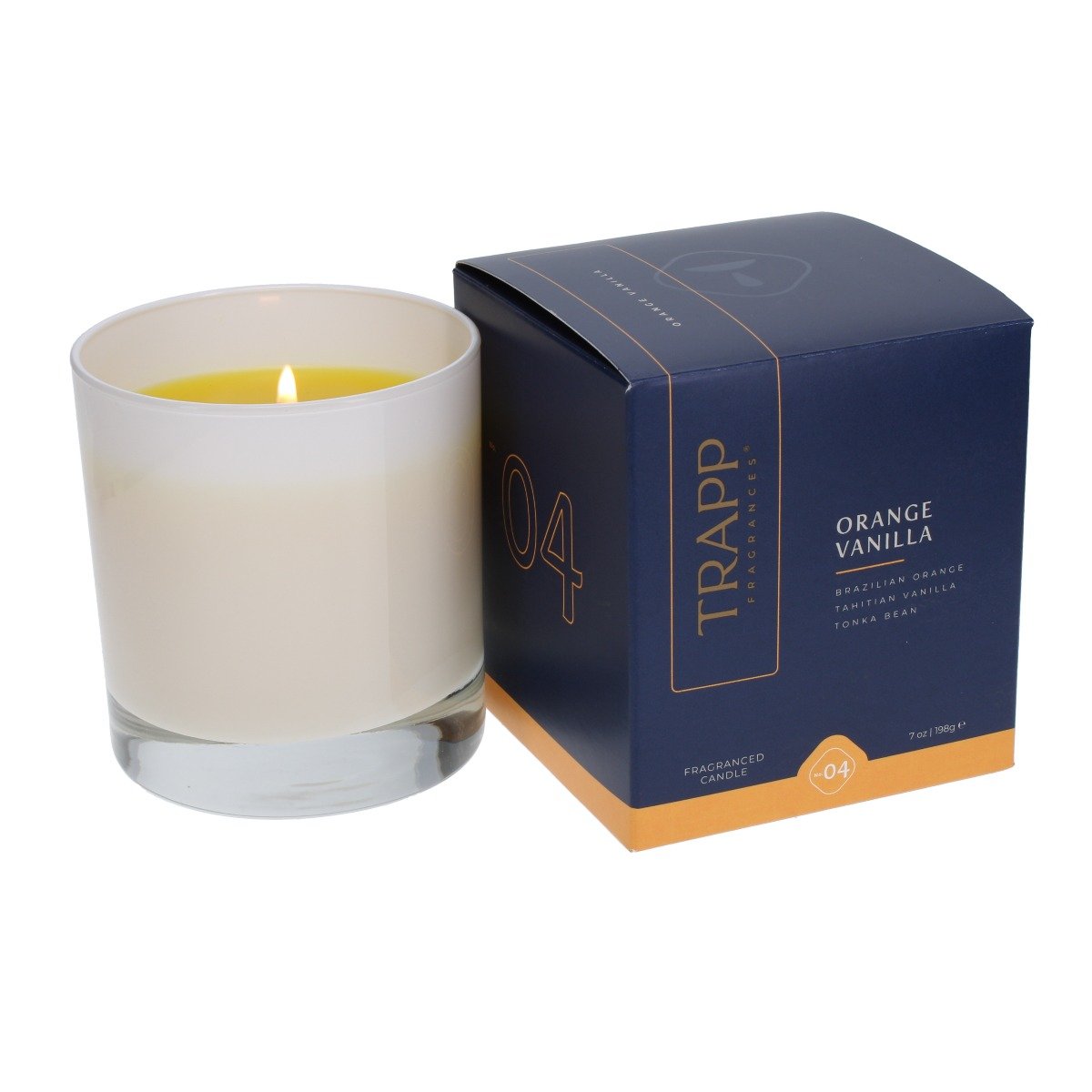
| Gourmand | Edible notes: vanilla, caramel, citrus cream | Living room in the evening, a cold-weather den | Trapp Orange Vanilla #4 (crisp orange, Tahitian vanilla) |
| Woody, smoky and leather | Wood, tobacco leaf, smoked tea, worn leather | Study, bedroom at night, open-plan living spaces | Delirium Suede & Smoke (tobacco leaf, moss, lapsang souchong tea) |
Fresh and citrus: Voluspa Goji Tarocco Orange

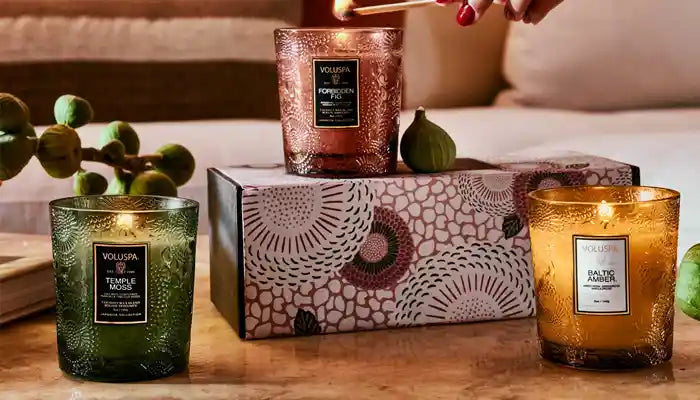
Voluspa Goji Tarocco Orange opens on tart tangerine and pomelo over blood orange, the scent of a fruit bowl that was just cut open. Citrus is the family we point to when someone says they do not like "candle smell," because it reads as clean air rather than perfume. Voluspa pours into coconut wax, and the price makes it the easiest way to find out whether a bright scent suits you before you commit to a larger vessel.
Fruity: Diptyque Baies

Diptyque Baies pairs blackcurrant and its green, sharp leaf with Bulgarian rose, and it was our number two bestselling candle of the year. Fruity scents are the widest-appeal family on the floor: sweet enough to feel welcoming, tart enough that nobody calls them cloying. If you liked Baies but want something louder and more tropical, Seda France Japanese Quince layers rhubarb, passion fruit and white peach over jasmine, and it was our number four candle of the year.

Floral: Cereria Molla Tuberose & Jasmine

Cereria Molla Tuberose & Jasmine smells like a courtyard in Andalusia at sunrise: tuberose and jasmine up front, orange blossom and a hint of narcissus underneath, and it was our number seven candle of the year. White florals are the family with the most staying power in our sales; our 2026 data shows tuberose and jasmine leading repeat purchases across both candles and diffusers. Florals are also the family people misjudge most in the jar, because a heady white flower smells sharper cold than it does lit.
Green: Diptyque Figuier

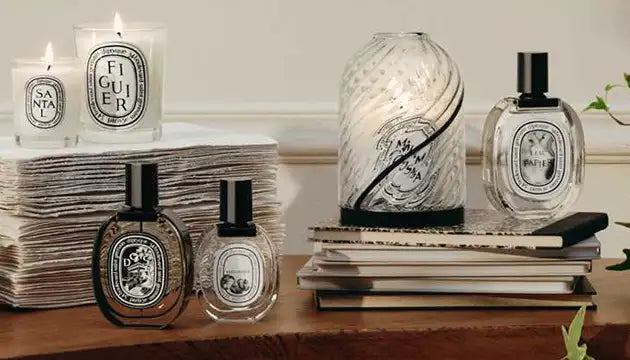
Diptyque Figuier is the whole fig tree rather than the fruit: bark, sap and leaves with an almost-ripe fig in the middle. Green scents are the answer for anyone who finds florals too perfumed and citrus too fleeting. In his living-room guide Anthony names Figuier the pick for anyone who lives somewhere mild and wants one candle for all four seasons.
Gourmand: Trapp Orange Vanilla #4

Trapp Orange Vanilla #4 is creamsicle nostalgia in a white glass: crisp orange lifted by Tahitian vanilla, in a 7 oz candle that burns for up to 50 hours. It was our number three candle of the year. Gourmands are comfort scents, and the trap is sweetness overload in a small room; the ones that last in a rotation, like this one, carry a bright note that keeps the vanilla from turning syrupy.
Woody, smoky and leather: Delirium Suede & Smoke

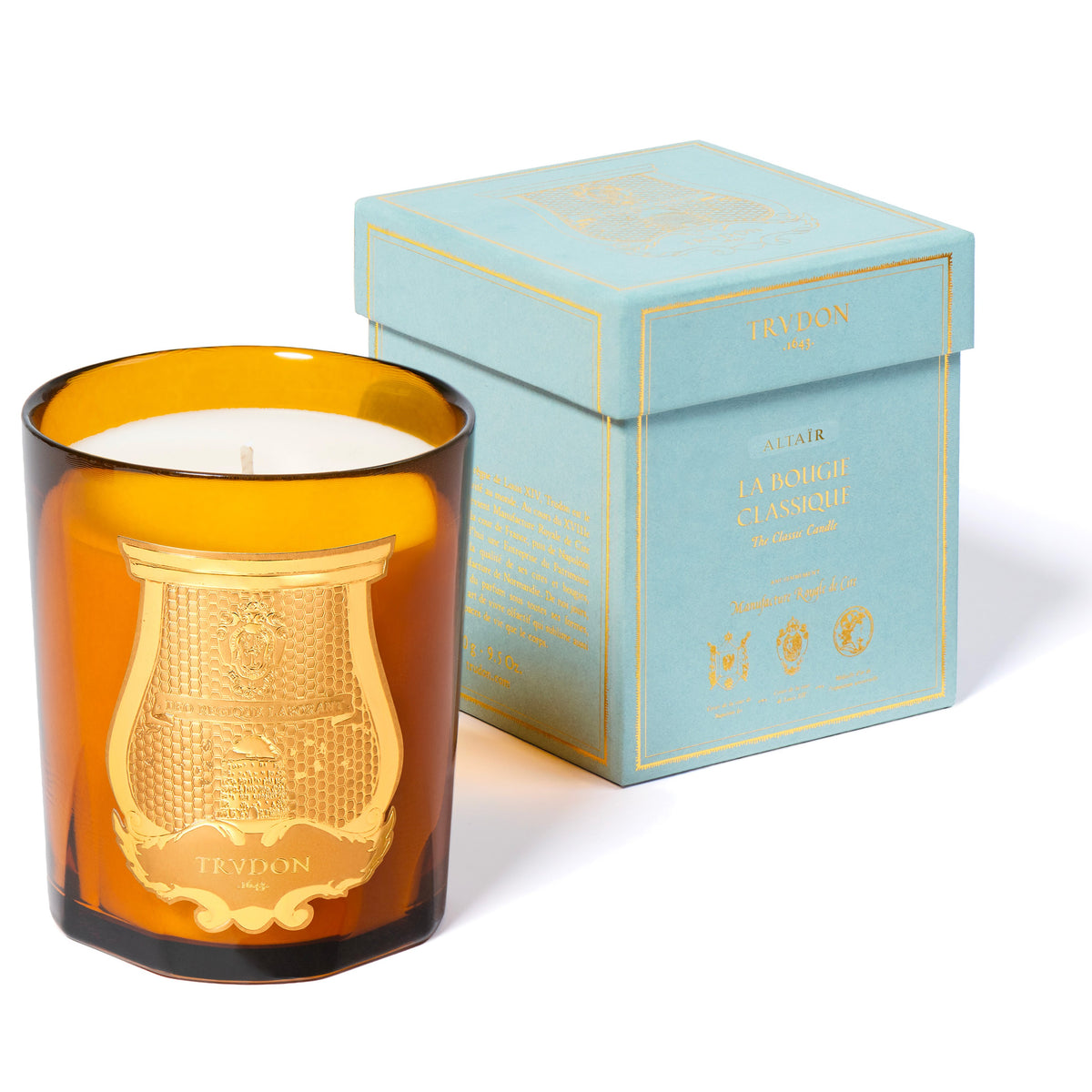
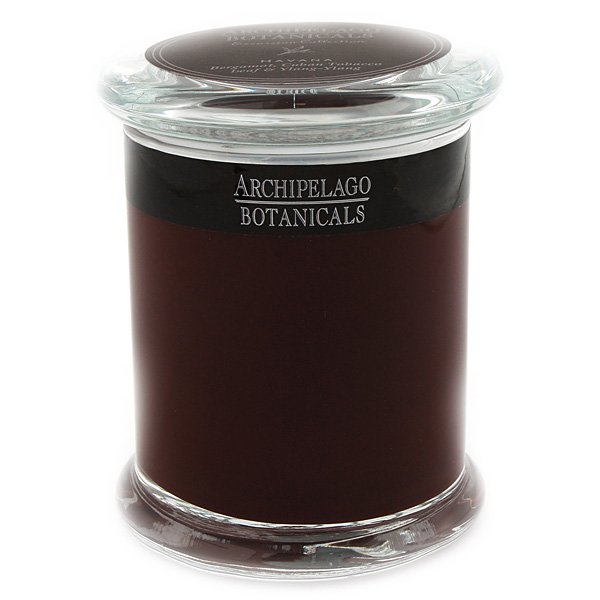
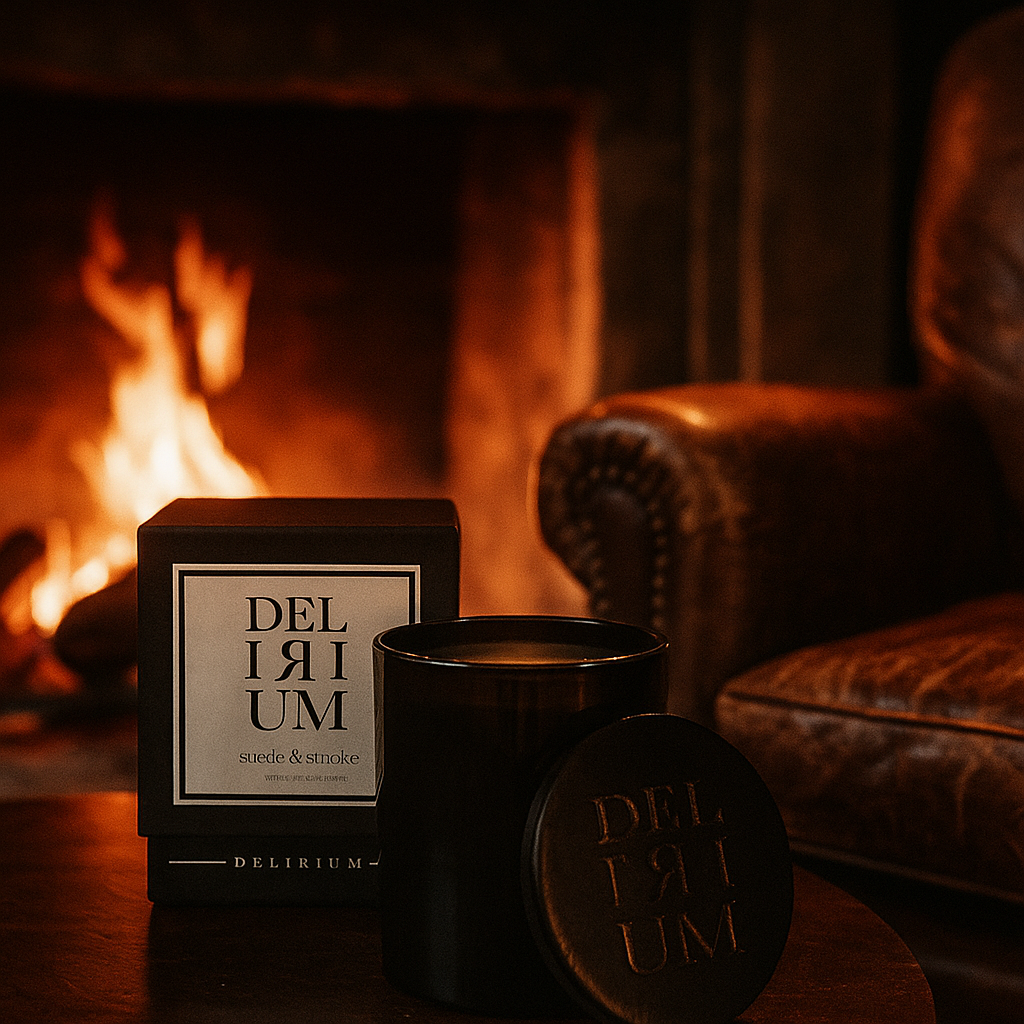
Delirium Suede & Smoke, our house scent hand-poured in Los Angeles, layers tobacco leaves, moss and lapsang souchong tea with a flicker of papaya and green mandarin, and it is the best-selling candle in our store. If you want the same smoky mood from a heritage house, Trudon Ernesto, our number six candle of the year, goes darker with rum, clove, oakwood and labdanum under its leather and tobacco. For a lighter take, Archipelago Havana softens tobacco flower with bergamot and ylang ylang. Browse the whole family in our fall candle scents, where smoke and wood do most of their selling.


How Do You Turn a Perfume You Already Love Into the Right Candle Scent?
The fastest shortcut to a candle scent you will actually finish is the perfume on your dresser. Most people have already done the hard work of choosing a family; they just have not translated it. Read the notes on your favorite perfume, or the ones you notice first when you wear it, and match them to a family:
Bergamot, neroli, grapefruit or lemon at the top: fresh and citrus. Start with a bright candle and keep it for mornings.
Rose, jasmine, tuberose or peony at the heart: floral. If your perfume is a white floral, expect a candle in the same family to read stronger lit than it smells in the bottle.
Blackcurrant, peach, pear or fig: fruity or green, and the Baies and Figuier picks above are the two we would test first.
Vanilla, tonka, amber or caramel in the base: gourmand, or its warmer cousin amber.
Vetiver, cedar, leather, tobacco or incense in the drydown: woody, smoky and leather, the family that has been climbing our sales chart all year.
One caution: a candle scent is not a perfume diffused into a room. The same notes behave differently at candle temperature, and top notes that sparkle on skin can burn off quickly in a melt pool. Treat your perfume as a compass for the family, then choose the candle on its own merits.
How Do You Match a Candle Scent to the Room It Will Live In?
A candle scent that is lovely in a bedroom can be wrong in a kitchen, and the reason is usually intensity rather than taste. The room decides how much throw you need and which families will clash with what is already in the air.
Kitchen: reach for fresh, citrus or green. Anything sweet competes with cooking, and a gourmand next to a pan of garlic is a fight nobody wins. Citrus reads as clean even when the counter is not.
Living room: this is where most people land on a signature candle, because it is where you spend the most waking hours at home. Fruity and woody families hold up best here, and a large or open-plan room needs more throw than a single small candle can give. Anthony has two observations from the floor here. Customers who find their living room scent come back every five to six weeks for the same candle. And two medium candles always outperform one bigger candle: one near where air moves, one where you sit.
Bedroom: soft florals, woods and quiet musks. A bedroom is small and closed, so a candle that throws hard in a store can feel like too much by the second hour. Burn it for an hour before bed rather than all evening.
Bathroom and entry: green and fresh scents, or a bright fruity one. These are short-visit rooms, so you want a scent that registers in the first few seconds. Many customers keep a reed diffuser in these rooms instead, and our guide to candle scents for different moods covers the calm versus energizing side of the same choice.
One more room rule: choose one family per open space. Two strong candles from opposite families, a gourmand in the kitchen and a smoky wood ten feet away in the living room, blur into something neither brand intended.
Why Does a Candle Smell Different Lit Than It Does in the Jar?
Cold throw comes from fragrance oil sitting at room temperature on the surface of the wax. Hot throw comes from the melt pool, where heat releases the heavier base notes (woods, resins, vanilla, musk) that barely register when the candle is unlit. That is why a smoky candle can smell thin in the jar and fill a room once lit, and why a bright citrus can smell loud at the lid and fade faster in the air.
Three ways to test a candle scent before you commit:
Smell the wax, not the lid. The inside of the lid collects the top notes and exaggerates them. Put your nose close to the wax surface for a truer read.
Smell it lit, if you can. We keep candles lit on the floor most days for exactly this reason; a lit candle tells you in thirty seconds what an unlit one hides. Buying online, start with a smaller size of the scent you are curious about.
Give it a full first burn at home. Let the first burn run until the melt pool reaches the edge of the vessel, which often takes two hours or more for a classic single-wick candle. A candle judged on a fifteen-minute first light has not shown you its hot throw yet.
Do candles lose their scent over time? Yes, slowly, and mostly from the surface. Fragrance oil near the top of the wax evaporates when a candle sits uncovered for months, which is why an old candle can smell faint in the jar and still throw once the melt pool reaches the fresher wax below. Keep the lid on between burns, store candles away from sun and heat, and burn a new candle within a year or so for the fullest candle scent.
Season changes the answer too. The same woody candle that feels heavy in August reads as cozy in November, and a citrus that sparkles in summer can feel thin against a cold evening. A simple habit that solves it: keep one light candle and one deep one, and switch when the clocks change.
Which Candle Scents Are the Safest to Buy Without Smelling Them First?
If you are buying blind, for a gift or from a screen, the safest candle scents are the ones that sit in the middle of their family rather than at the edges. Fruity florals and citrus-vanilla gourmands please the most people; smoke, leather, heady white florals and green vegetal scents divide rooms. That is not a judgment on the bolder families, which include our own best seller. It is a recognition that a polarizing scent is a wonderful purchase for yourself and a gamble for someone else.
For a gift, our short list is Diptyque Baies, Trapp Orange Vanilla #4 and Voluspa Goji Tarocco Orange, one fruity, one gourmand, one citrus, and between them they cover most people who say "I like candles" without naming a family. For someone who already wears a smoky or leather perfume, Delirium Suede & Smoke is the gift that tells them you noticed. And if you want to see the whole list of what actually sells, our best candle scents page ranks the floor's bestsellers.
Still undecided? Come into our West Hollywood store at 7980 Santa Monica Boulevard and smell them lit. Smelling beats reading every time.
Reviewed and updated September 26, 2026.