



Soy Candles: A Luxury Retailer's Honest Guide to the Wax
After 23 years selling soy candles at our West Hollywood shop, we can tell you which ones hold up and which ones don't, and the answer almost never has anything to do with the word "natural" on the front of the jar. Soy wax is a tool, not a guarantee. A well-made paraffin candle outburns a poorly made soy one every time. A great soy candle, on the other hand, is one of the cleanest, most fragrant ways to scent a room, and the gap between great and mediocre is mostly fragrance load, wick selection, and pour quality.
This guide is what we walk customers through at the counter when they ask what "soy candle" actually means and whether the marketing's true. Anthony Carro, founder of Candle Delirium, has been buying candles into this store since 2003.
What soy wax actually is
Soy wax is hydrogenated soybean oil, solidified into a wax suitable for candle making. The first commercial soy candle wax was developed in 1996 by Michael Richards at Cargill in partnership with researchers at Purdue University, originally as an agricultural use case for surplus soybean oil. Within a decade it was the second-most-common candle wax in the United States after paraffin.
Compared to paraffin, soy wax burns at a lower temperature, holds fragrance oil at a slightly higher load, and clears with soap and water if it spills. Compared to coconut wax, which has overtaken pure soy at the luxury end since roughly 2018, it's firmer at room temperature and less expensive per pound. Compared to beeswax, it's cheaper, vegan, and has a more neutral scent on its own.
The three things that actually matter when you buy soy
The label says "soy" and that's the start of the conversation, not the end. After two decades on the floor, the brands that customers come back for share three traits, and the brands that disappoint share their absence.
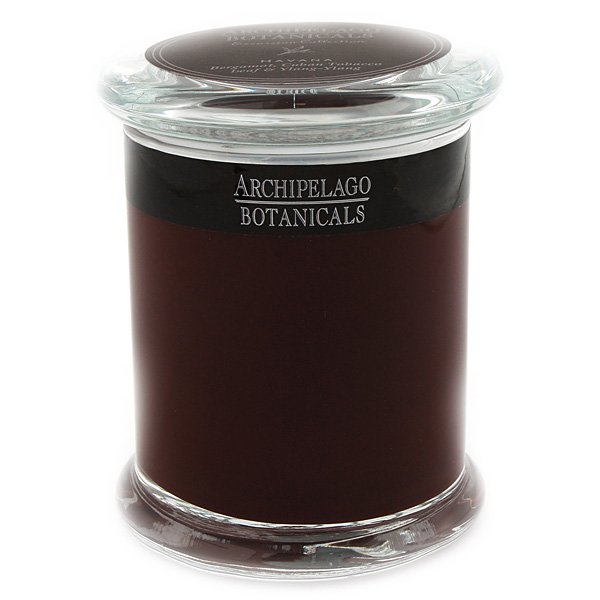
Fragrance oil load above 8%. A candle is mostly wax, but the part you smell is the fragrance oil suspended in it. The industry standard is 6% to 8% by weight. Brands we carry at the top of the soy category, like Antica Farmacista and Archipelago Botanicals, sit above 10%. That's what produces what the industry calls cold throw (scent off an unlit candle) and hot throw (scent off a burning one). Below 8%, you light a soy candle and smell wax.
Cotton or wood wick, properly sized to the vessel. A wick that's too thin gives you a tunneled burn pool and a candle that smokes when you blow it out. A wick that's too thick gives you a vessel that overheats. Reputable soy brands publish their wick test data; the rest do not. If you've ever wondered why a $14 grocery store soy candle drowns its wick on second burn, this is why.
Cooling time and pour discipline. Soy is prone to surface frosting and sinkholes if it cools too fast or unevenly. The brands that pour clean, even tops are doing it on purpose; they're also the ones that put printed fragrance notes on the bottom of the jar instead of vague descriptors. We notice both at the counter.
Soy versus coconut, beeswax, and paraffin: what actually differs
Customers ask us this almost weekly. The honest answer: each wax has a use case, and most luxury candles today are blends.
Soy versus paraffin. Soy burns cooler and slower, which can give a slightly longer total burn time per ounce of wax. Paraffin holds fragrance more aggressively in some formulations, which is why some brand chemists still use paraffin-soy blends for stronger throw. The "paraffin is toxic" claim that circulates online isn't supported by current EPA or NCA (National Candle Association) data; the soot question depends much more on wick design and burn habit than wax type. A well-trimmed paraffin candle in a clean room burns clean. A poorly wicked soy candle smokes.
Soy versus coconut. Coconut wax holds fragrance even better than soy and gives a creamier, smoother burn pool, which is why a lot of the brands at the luxury end have moved to coconut-soy blends. Coconut is more expensive per pound, which is part of why a $58 coconut-blend candle is now common where a $42 soy candle used to live.
Soy versus beeswax. Beeswax has a faint honey scent of its own, burns the longest of the four, and is the most expensive. It's also not vegan, which rules it out for a meaningful share of our customers. For a pure-natural candle with no added fragrance, beeswax wins; for a scented candle, soy or coconut blends throw the fragrance better.
The soy candles we actually recommend at the counter
The soy candles we recommend most often share the three traits above, plus a track record of customers coming back for the same scent year after year. A short list of what we reach for first.
- Antica Farmacista Acqua ($57). An Italian apothecary brand with one of the cleanest soy burns we carry. Acqua opens with bergamot, settles into white musk, and stays present without becoming heavy. This is what a soy candle should smell like when the fragrance load is done right.
- Archipelago Stonehenge ($32). A long-time staff favorite at the everyday price point. Notes of patchouli, smoked oak, and tea. Archipelago has been making soy candles since 1990 and the throw on this one consistently surprises customers expecting "just" a soy candle.
- Apothia Bronzed ($65). Orange blossom and jasmine. A florals-with-spine soy, which is a category most brands fumble. Apothia gets the wick-to-vessel ratio right and the cold throw is strong enough that you smell it from across a room.
For customers who like the soy clean-burn profile but want a richer, more enveloping wax, we usually point them toward our Delirium house line, which is hand-poured in Los Angeles in the same coconut-soy blend territory as the luxury houses we carry. Suede & Smoke ($58), founder Anthony Carro's favorite from the line, layers tobacco leaves, dark tea, moss, and leather; it's what the leather-and-library customers reach for when they've outgrown their first soy candle.
How to burn a soy candle so it lasts
Most soy candle disappointment is burn habit, not the candle. Three things keep a soy candle even and clean, and we've watched the same three mistakes sink dozens of perfectly good candles at the counter.
First burn: let the wax melt fully edge to edge before you blow it out. Soy has wax memory; if you put it out before the pool reaches the glass on the first burn, the candle will tunnel for the rest of its life. Expect 2 to 4 hours on the first burn for an 8 oz vessel.
Wick trim: cut the wick to a quarter inch every single time before you light, including the very first time. Untrimmed wicks smoke, mushroom, and overheat the vessel. A pair of $15 wick trimmers pays for itself across three candles.
Burn windows: 2 to 3 hours at a time, never more than 4. Past four hours the wax begins to oxidize, the throw flattens, and the wick can carbon up. Put it out, let it cool, light it again later.
Reviewed and updated June 8, 2026.
By Anthony Carro, founder of Candle Delirium.